24. November 2026, Topic: Aquatic Ecotoxicology
Ali Kizgin wins the 2026 Otto Jaag Prize for his work on wastewater monitoring
Online monitoring of wastewater is key to protecting water bodies. Ali Kizgin’s doctoral thesis, which he completed at the Ecotox Centre, demonstrates the great potential of combining biological and chemical monitoring systems to identify toxic substances in treated wastewater. For this work, he was awarded the Otto Jaag Water Protection Prize at the 2026 ETH Day.
The Otto Jaag Water Protection Prize recognises work that makes a significant contribution to the protection and sustainable use of freshwater systems. This award-winning doctoral thesis contributes to these objectives by expanding the possibilities of online wastewater monitoring for the protection of water bodies. As part of a four-year collaboration between the University of Applied Sciences and Arts Northwestern Switzerland (FHNW), the Swiss Federal Institute of Aquatic Science and Technology (Eawag) and the Ecotox Centre, Ali Kizgin conducted research into the early detection of pollution incidents through online biomonitoring, at the interface between ecotoxicology, environmental chemistry, wastewater treatment, data analysis and applied water protection.
Applications in the wastewater sector
Biological early-warning systems were originally developed for monitoring drinking water or surface water. However, even treated wastewater can be continuously monitored for the presence of organisms using online monitoring. This gives operators of wastewater treatment plants and discharging industrial companies the ability to respond to acute pollution quickly.
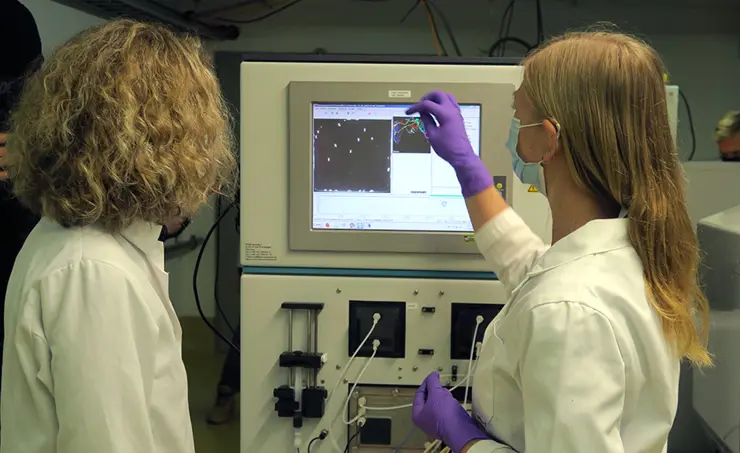
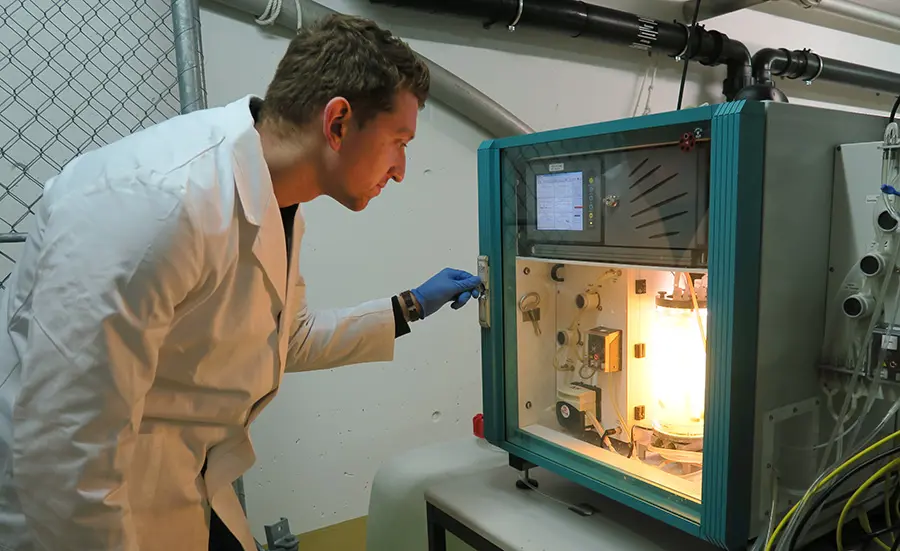
Ali Kizgin, who currently works as a research assistant at the University of Applied Sciences and Arts Northwestern Switzerland (FHNW), used several test systems involving algae, water fleas and freshwater shrimp in both municipal and industrial wastewater treatment plants for his doctoral thesis. Biomonitoring was then carried out in parallel with the mobile, automated mass spectrometer MS2Field, which enables high-temporal-resolution measurements of pollutants in a body of water. Ali Kizgin thus took the use of biomonitoring to monitor treated wastewater and detect toxic substances a decisive step further.
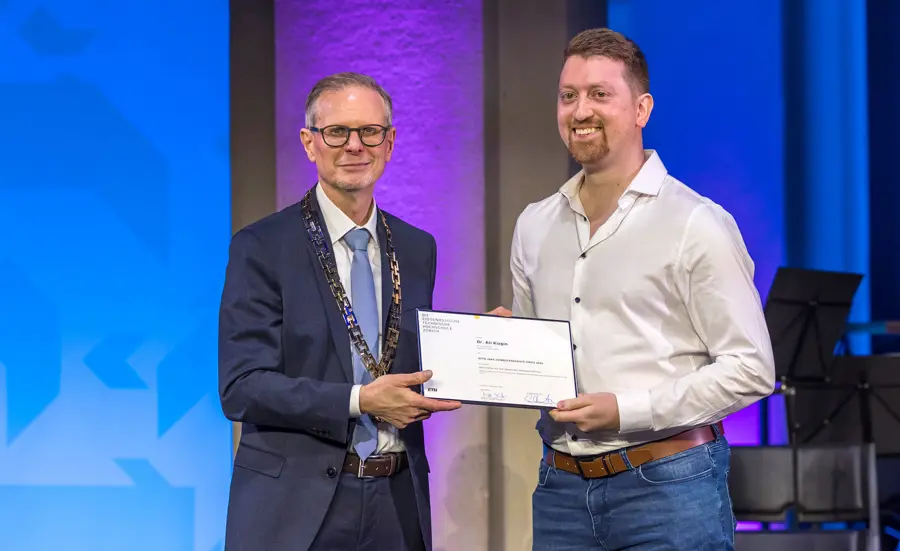
ETH Rector Günther Dissertori presents Ali Kizgin with the 2026 Otto Jaag Water Protection Prize (Photo: ETH, Alessandro Della Bella).
 E-mail
 Facebook
 Twitter
Contact
 Subscribe to our News by RSS feed