24. April 2026, Topic: Aquatic Ecotoxicology Sediment Ecotoxicology
Dynamic pollutant carriers: The quality of suspended matter in Lake Geneva
Suspended matter is an often underestimated but crucial component of aquatic environments. It binds nutrients and pollutants and transports them through the water column. A new study from Lake Geneva shows how significantly the chemical and ecotoxicological quality of these particles can change over time – and what role extreme weather events, tributaries and biological processes play in this.
Countless microscopic particles, known as suspended matter, float in the water of lakes. They act as mobile collectors of substances from the surrounding environment: dissolved substances accumulate on their surfaces and are transported further. In this way, the particles form a dynamic link between the water column and the sediment. It is precisely this dynamic that makes them particularly interesting to researchers. Whilst sediments tend to represent a long-term archive of environmental conditions, suspended matter reflects short-term changes in a lake’s material balance.
Suspended matter as a key compartment
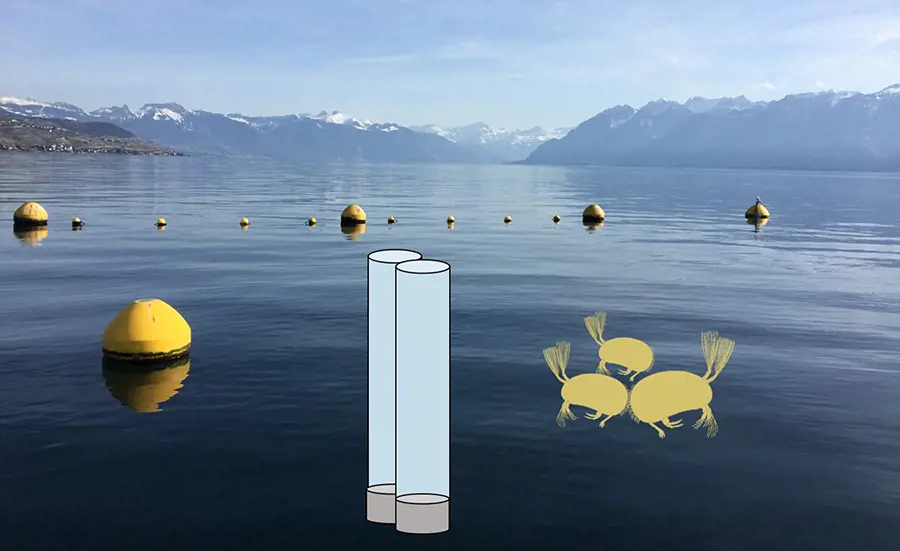
Suspended matter serves as a food source for many organisms, yet it can also contain pollutants. Its chemical composition and potential ecotoxicity therefore provide important insights into the health of a lake. The Ecotox Centre characterised the quality of suspended matter in Lake Geneva from 23 March to 24 April. “Thanks to the LéXPLORE experimental platform, we were able to install suspended matter traps at various depths and use them for sampling,” explains project leader Rébecca Beauvais. “We then chemically analysed the particles and observed their effect on the growth and survival of ostracods.”
As expected, the concentration of suspended matter was particularly high in summer, as snowmelt leads to increased inflow via the Rhône. However, peak values were also noticeable in connection with heavy rain and high waves, which led to the resuspension of sediments in the lake and its tributaries.
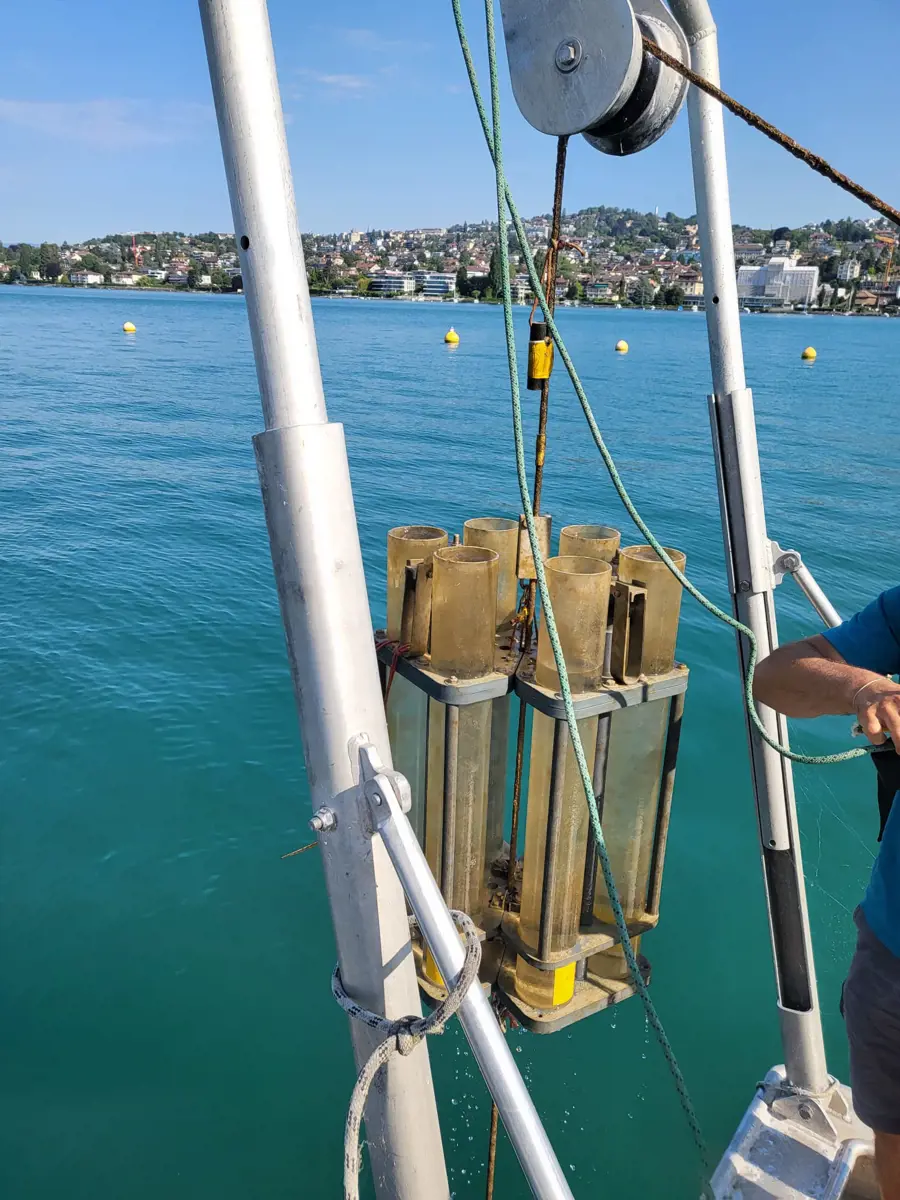
Suspended matter was collected from Lake Geneva using suspended matter traps.
 E-mail
 Facebook
 Twitter
Contact

 Subscribe to our News by RSS feed