News
06. October 2026
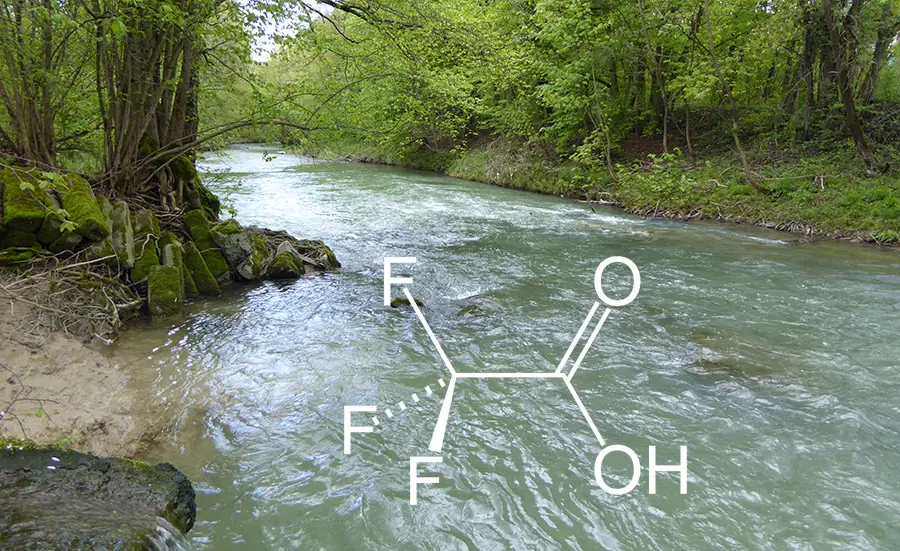
Trifluoroacetic acid: a challenge for water protection and drinking water supply
Trifluoroacetic acid (TFA), an extremely persistent PFAS compound, can be detected in Swiss surface waters and groundwater almost everywhere. Current knowledge about the sources of contamination, potential health effects and the limitations of water treatment leads to a clear conclusion: Anyone wishing to limit contamination in the long term must tackle the problem at the source.
Read more17. September 2026
Regulatory changes regarding PFAS-contaminated food and drinking water: greater priority should be given to health protection
The Ecotox Centre, together with other researchers, contributed to and coordinated a statement by the Swiss Academies of Arts and Sciences. The researchers welcome the introduction of a new maximum limit in drinking water for four critical PFAS compounds, but state that the limit is several times too high. Furthermore, they argue that the newly permitted practice of mixing highly contaminated foodstuffs is inadequate for ensuring the protection of public health.
Read more28. August 2026
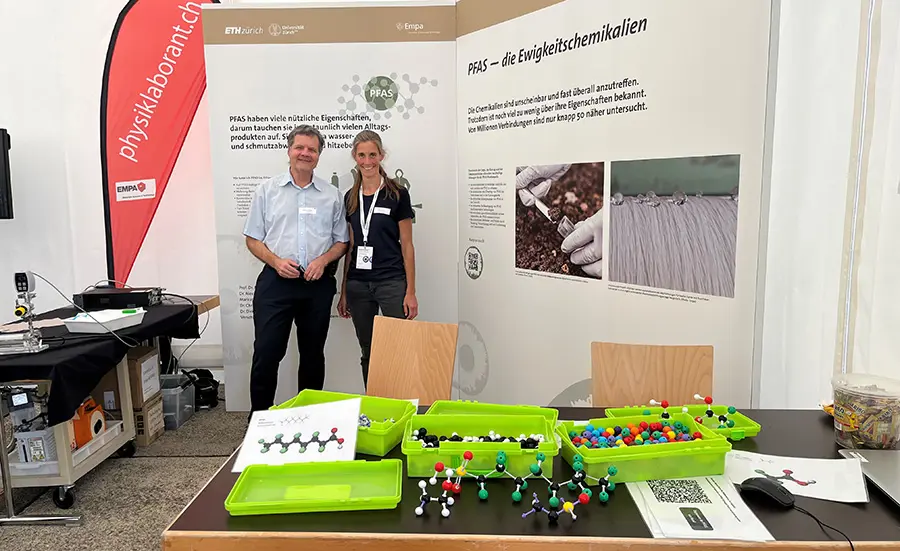
Ecotox Centre at the Scientifica science festival
Last weekend, Alexandra Kroll supported Empa and provided the public with information on PFAS and their impact on the environment.
Read more25. August 2026
Pesticides: Overview of limit values in Switzerland and the EU
A new info sheet from the Ecotox Centre provides an overview of the currently applicable limit values for pesticides in water bodies and in drinking water in Switzerland and in the EU. Other topics covered include monitoring and the feedback loop between monitoring and authorisation.
Read more25. June 2026
Mixture toxicity assessment of pesticides in soils: new publication
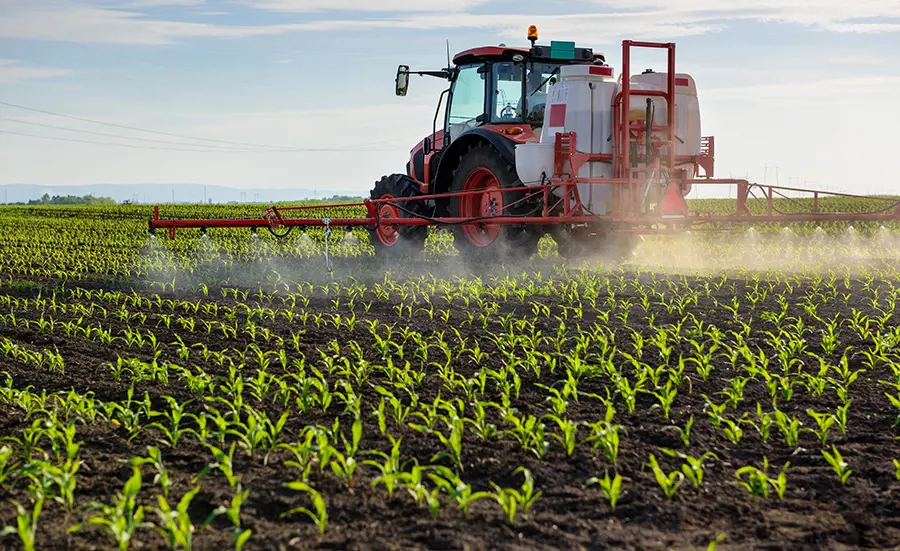
Our new review article synthesises the scientific evidence for mixture toxicity in soils and identifies major data gaps and conceptual shortcomings in the current risk assessment practice in soil. It proposes an approach for the risk assessment of mixtures in soil that considers each individual trophic level separately.
Read more04. June 2026
Korean scientist visits
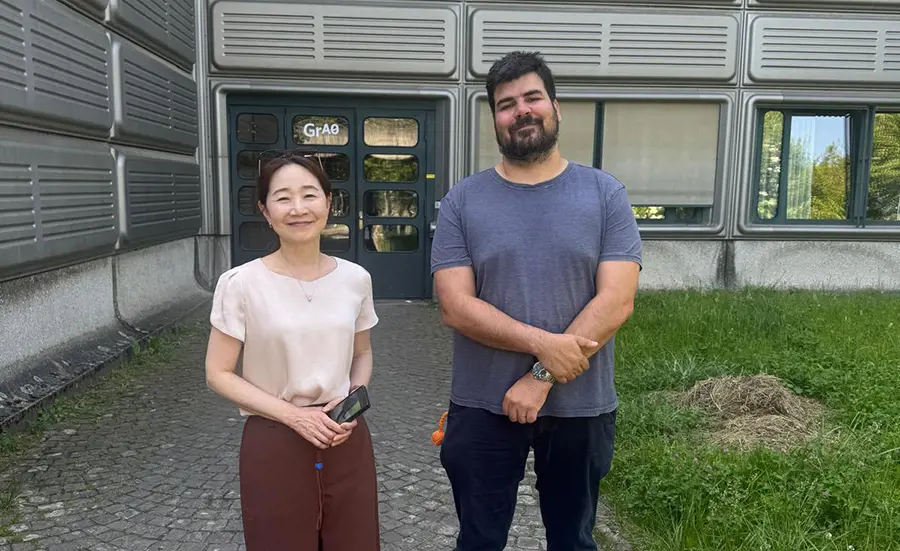
Last week, we had the pleasure of welcoming Prof. Youn-Joo An from Konkuk University (Seoul, Korea) to the Ecotox Centre in Lausanne. The discussions were highly enriching, and we identified several promising avenues for future collaboration.
Read more02. June 2026

Inconsistent risk assessment of chemicals compromises water protection in Europe
A new study highlights significant room for improvement in European chemicals regulation. The environmental risk assessment for a single substance can vary considerably depending on the regulatory context. This has direct implications for water protection.
Read more26. May 2026
A look back at SETAC 2026 in Maastricht
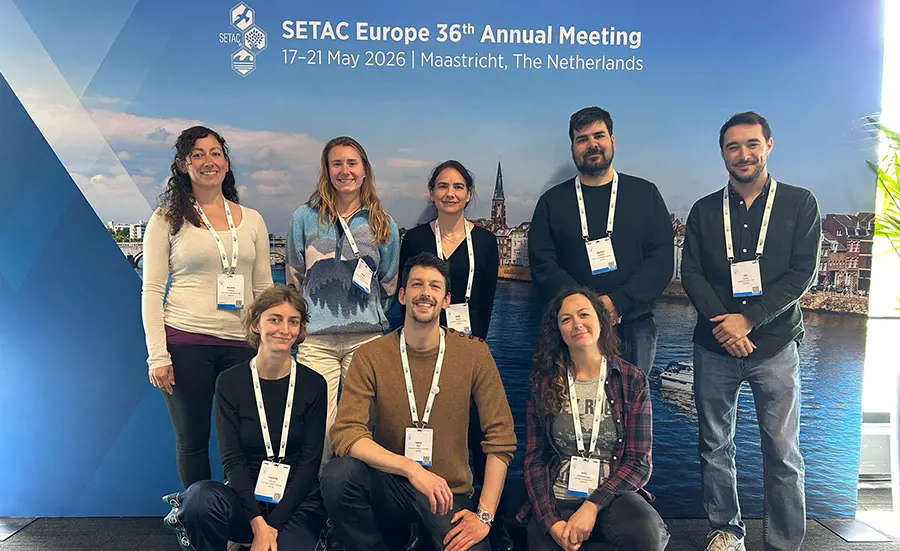
We are looking back to an exciting week at SETAC 2026 in Maastricht. It was a great place to share our latest findings with colleagues, discuss our work, and gain fresh inspiration through stimulating exchanges.
Read more22. May 2026
Roads as a source of pollution: new challenges
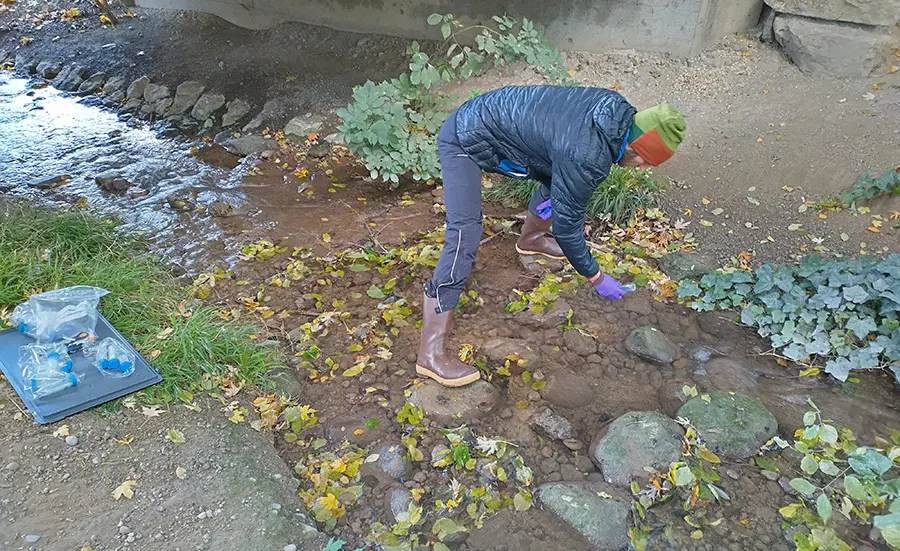
When it comes to the release of hazardous substances from roads into the environment, the focus is increasingly shifting from traditional pollutants and particles to novel, and in some cases unknown, substances. The Ecotox Centre is investigating the ecotoxicological effects of road runoff and tire wear and is attempting to identify the most critical substances.
Read more19. May 2026

Swiss birds of prey widely contaminated with rodenticides
The Ecotox Centre has analysed Swiss birds of prey for residues of rodenticides. The results are worrying: 92% of the buzzards and kestrels examined were contaminated with these persistent substances. Whilst direct deaths from poisoning were rare, the high level of sublethal contamination raises questions about the long-term health of our native birds of prey.
Read moreContact

 Subscribe to our News by RSS feed