Toxic effects of suspended matter from Lake Geneva on ostracods
In surface waters, suspended matter, which consists of inorganic and organic particles, forms an important interface between water and sediment. In contrast to sediment, suspended matter reacts quickly to changing environmental conditions and is therefore dynamic in terms of time (seasons) and space (depths). As suspended matter can bind chemical and biological pollutants, it poses a potential threat to water organisms that should not be underestimated.
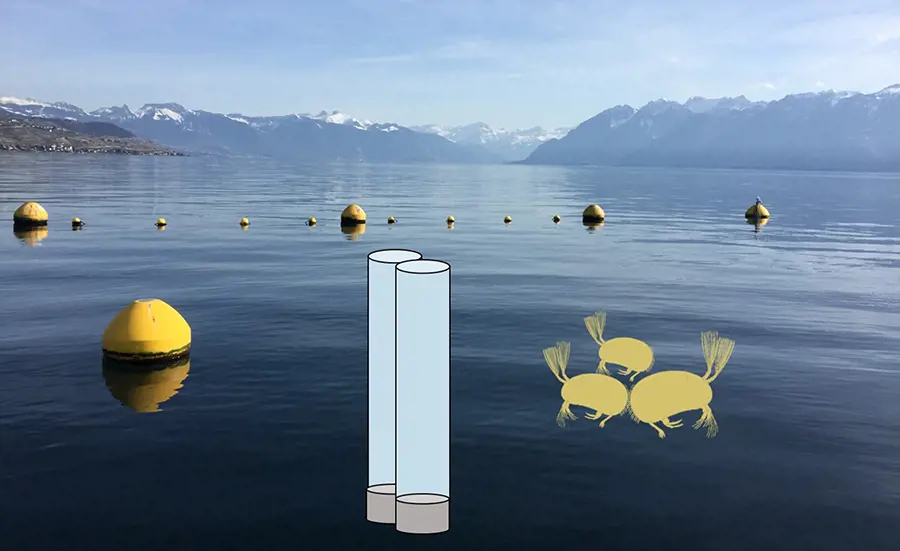
To find out more about the dynamics of suspended matter in lakes and the associated pollutants, we monitored the ecotoxicological quality of suspended matter from Lake Geneva over a period of several months. To this end, we determined how these affect the mortality and growth of the epibenthic ostracode Heterocypris incongruens.
Throughout 2023, sediment traps were deployed to collect suspended matter each month from four different depths : 10, 30, 50 and 100 metres. The suspended sediments were characterised physico-chemically (grain size distribution, total organic carbon, S, N and P content, metals and organic matter), and a bioassay with chironomid larvae was also carried out. In addition, we plan to test the effects of suspended matter on the larvae using enzymatic, energetic and molecular biomarkers.
Publication
Contact