Ecotoxicological investigation of PFAS in sediments
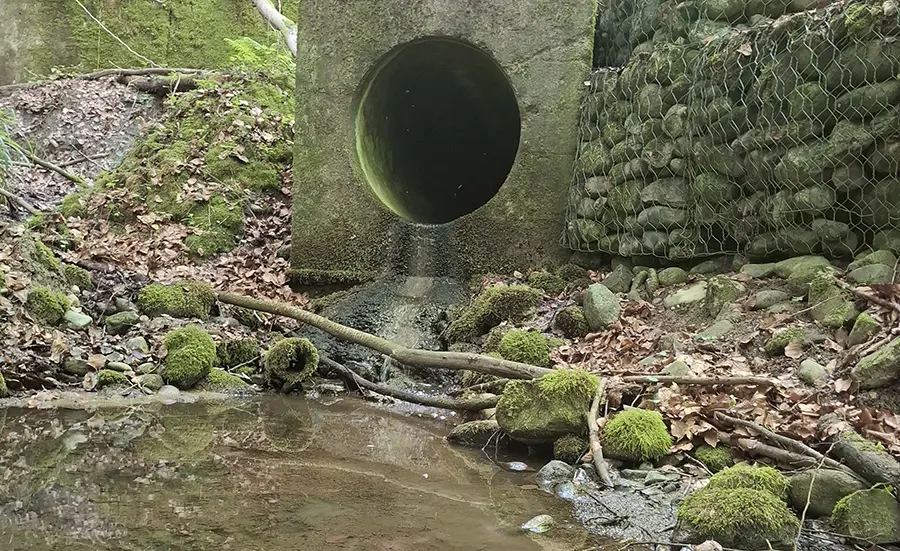
Per- and polyfluoroalkyl substances (PFAS) are used in numerous industrial and consumer products. Their extreme persistence explains their widespread occurrence in the environment worldwide. Commissioned by the Swiss Federal Office for the Environment, the Ecotox Centre is investigating the ecotoxicological quality of sediments in three watercourses located near PFAS-contaminated sites. These include an industrial site where firefighting training exercises were conducted and two former landfills.
Sediment quality is assessed using a triad-based approach combining physicochemical analyses (including the risk assessment of PFAS in sediments), a battery of sediment-contact bioassays using chironomids, nematodes and ostracods, and the analysis of benthic communities (nematodes and oligochaetes). This approach was proposed by the Ecotox Centre in its expert report on the ecotoxicological assessment of contaminated sites.
In addition, as part of a pilot study, the Ecotox Centre will prepare sediment elutriates, i.e. aqueous extracts obtained by shaking sediments with surface water. Following a settling phase and subsequent centrifugation, the toxicity of these aqueous extracts will be assessed using a battery of three aquatic bioassays involving bacteria, algae and crustaceans.
The study aims to address the following questions:
Is the sediment quality impaired downstream of the contaminated sites?
Does PFAS contamination in sediments pose a risk to benthic communities or aquatic fauna?
Is there a relationship between PFAS concentrations in sediments and water and their effects on benthic communities and aquatic fauna?
Contact