Selection of procedures in which the Ecotox Centre is/has been involved:
Still active
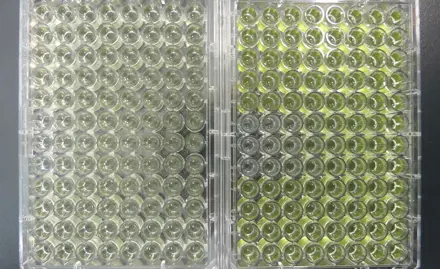
Combined algal test
Measurement of photosynthetic inhibition in single-celled algae. The inhibition of photosynthesis is based on the inhibition of photosystem II (PSII) and indicates toxicity specific to herbicides.
A proposal for ISO/NP 25127 was submitted by the Ecotox Centre and has been presented on several occasions. The vote on the proposal will take place in 2026. If it is adopted, the standard could be finalised around 2030.
Bioassays for the detection of dioxin-like substances
ISO 24295 Water quality -- Determination of the dioxin-like potential of water and wastewater -- Method using in vitro mammalian cell-based reporter gene assay
The Ecotox Centre is a member of the working group and participated in the ring test.
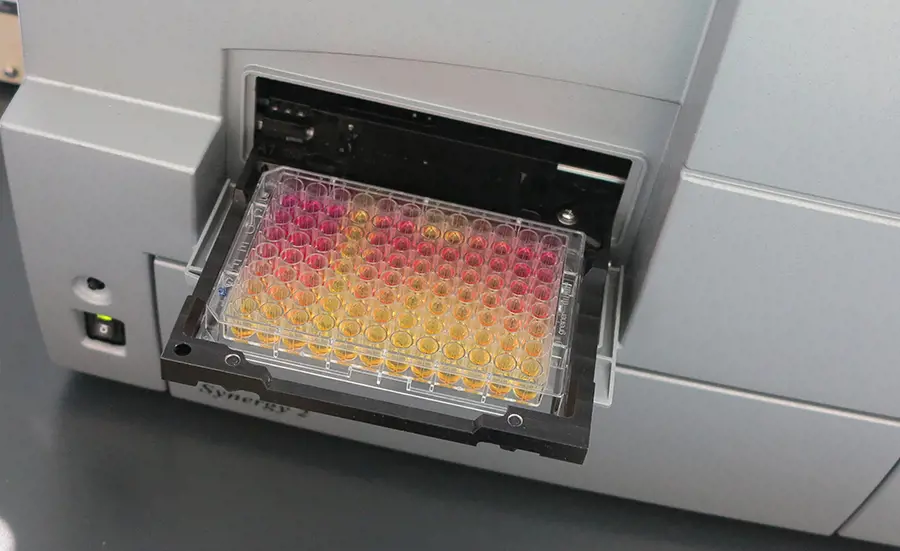
Bioassays for the detection of oestrogenic substances – combination with high-performance thin-layer chromatography (pYES)
The Ecotox Centre is collaborating under DIN on a technical specification for the pYES, which combines a bioassay based on genetically modified yeasts with high-performance thin-layer chromatography. The test is more sensitive than the conventional YES and, can help to identify substances with oestrogenic effects in a sample. The resulting standard, DIN/TS 38415-10, will be published shortly.
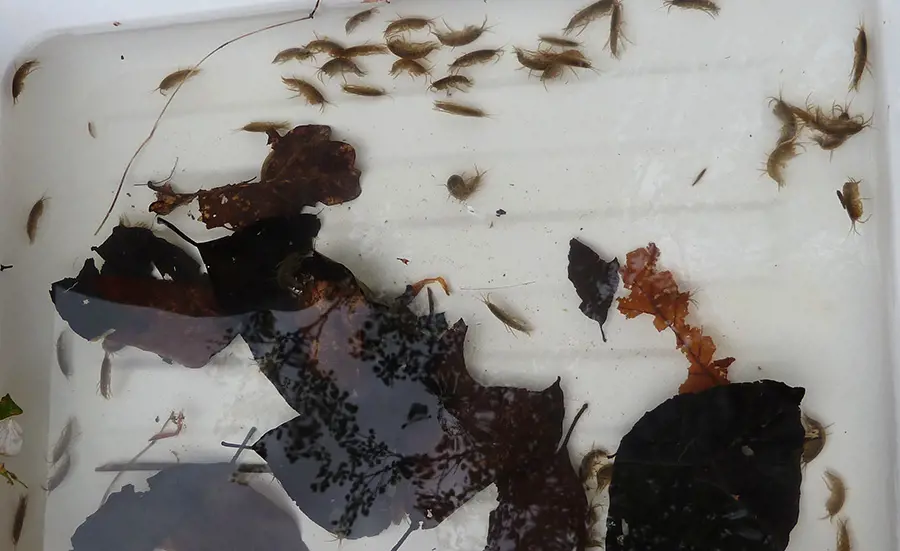
Sediment test using native amphipods Gammarus sp.
Chemicals that may accumulate in sediment must be tested for their toxicity to sediment organisms as part of the authorisation process. At present, there are only a few OECD guidelines for testing sediment-bound chemicals: a test using chironomid larvae is usually employed for this purpose (Test No. 218: Sediment-Water Chironomid Toxicity Using Spiked Sediment). For a detailed risk assessment, additional test methods using more sensitive species such as amphipods are required.
An OECD test guideline for amphipods is currently being validated through a ring trial (‘Sediment-Water Amphipod Toxicity Test Using Spiked Sediment’, Project 2.68). The guideline focuses on the North American amphipod Hyalella azteca, but permits the use of other species. The Ecotox Centre is therefore contributing to the OECD standardisation of the sediment toxicity test using the native freshwater amphipod Gammarus sp.
Replacing peat in artificial soils and sediments
The Ecotox Centre is involved in the OECD RePEAT project, which seeks alternatives to peat as a source of organic matter in artificial soils and sediments. Peatlands are very important for biodiversity and contain up to 25% of the world’s carbon, meaning that their drainage releases significant amounts of carbon dioxide. For these reasons, the extraction and use of peat are increasingly being restricted in OECD countries.
In Switzerland, peatlands have been protected since 1987 and peat extraction is no longer permitted. Nevertheless, Switzerland imports an estimated 500,000 m³of peat per year. In order to reduce environmental impacts abroad as well, the Federal Council adopted the Peat Phase-out Plan in 2012. As peat is currently used in artificial soils and sediments as a source of organic material, an alternative must be found so that chemicals can continue to be tested in accordance with OECD guidelines.
completed
Calculation of biological equivalence concentrations
ISO 23196:2022 Water quality — Calculation of biological equivalence (BEQ) concentrations
This standard specifies the derivation of biological equivalence (BEQ) concentrations for results from in vitro bioassays based on the measurement of effects on a biological process such as enzyme induction or cell growth. To derive BEQ concentrations, the effect caused by a sample is expressed as the concentration of a reference compound that produces the same effect. The Ecotox Centre led the procedure in collaboration with the BfG.
Requirements for interlaboratory trials
ISO/TS 5594:2022 Soil and water quality — Guidance and requirements for designing an interlaboratory trial for validation of biotests
The Ecotox Centre was a member of the working group responsible for this technical specification.
Bioassays for the detection of oestrogenic substances
ISO 19040: Water quality — Determination of the oestrogenic potential of water and wastewater
In 2018, standardised in vitro bioassays for determining the oestrogenic potential in water and wastewater were introduced for the first time. These bioassays measure the activation of the human oestrogen receptor and express the concentration in the sample as 17β-oestradiol equivalents (EEQ). The Federal Institute of Hydrology (BfG), the Ecotox Centre and the University of Frankfurt developed the standards in collaboration and took part in all three interlaboratory tests.
The standard is divided into three specific test methods using different test organisms and cell systems:
ISO 19040-1:2018: Uses genetically modified yeast cells (Saccharomyces cerevisiae, classic L-YES test).
ISO 19040-2:2018: Uses the robust, salt- and temperature-tolerant yeast strain Arxula adeninivorans (A-YES), ideal for samples with high salinity.
ISO 19040-3:2018 Based on stably transfected human cell lines (in vitro reporter gene assay) for very high sensitivity
Determination of the toxic effects of pollutants on the germination and early growth of higher plants
ISO 18763:2016 Soil quality — Determination of the toxic effects of pollutants on germination and early growth of higher plants
The Ecotox Centre has participated in interlaboratory tests using this method, which determines the toxicity of soils or sediments to higher plants. The germination and root and shoot growth of sugar sorghum (Sorghum saccharatum), garden cress (Lepidium sativum) and white mustard (Sinapis alba) are examined in special standard test vessels in which the seedlings can be measured directly using image analysis.
Sediment contact test with Myriophyllum aquaticum
ISO 16191:2013: Water quality — Determination of the toxic effect of sediment on the growth behaviour of Myriophyllum aquaticum
The Ecotox Centre participated in interlaboratory tests for the ISO standardisation of the sediment test using Myriophyllum aquaticum (water milfoil), a sensitive aquatic plant. This plant test involving direct contact with sediment was to be standardised, as there are as yet no standardised bioassays involving macrophytes that root in sediment. Macrophytes play an important role in freshwater ecosystems. The BfG took the lead in the standardisation process.