10. November 2026, Topic: Aquatic Ecotoxicology Sediment Ecotoxicology
Tire wear alters biofilm communities
Tire wear particles enter water bodies via road runoff and wastewater. A new study shows that these particles can alter the composition and function of natural biofilm communities, which form the basis of the aquatic food web.
Everyday driving generates tire wear particles, which accumulate along transport routes and are carried into soil and water bodies mainly by road runoff. In Europe, tire wear emissions are estimated at around 450,000 tonnes annually. However, little research has yet been conducted into the impact these particles can have on complex aquatic communities.
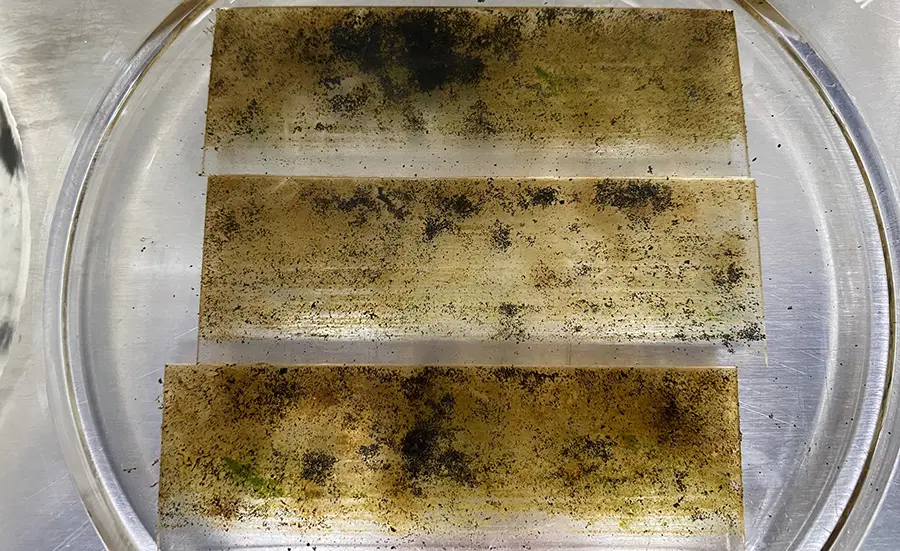
Of particular interest here is periphyton, the natural biofilm that covers stones and other surfaces in streams. It consists of algae, bacteria and fungi embedded in a complex network and plays a central role in the water body: through photosynthesis, it produces organic matter and thus forms an important source of food and energy for the food web. “Changes in the periphyton could therefore have consequences for the entire food chain within the ecosystem,” explains Sara Gonçalves, a postdoctoral researcher at Eawag (Utox). A team of researchers from Eawag, EPFL and the Ecotox Centre has therefore taken a closer look at the effects that tire particles have on the periphyton.
Tire particles accumulate on biofilm
To investigate these interactions, the research team exposed near – natural periphyton to different concentrations of shredded tire treads (50, 500 and 1,000 mg/L) for two weeks. The researchers initially observed that the tire particles accumulate on and within the biofilm: at higher concentrations, around 25 to 30 per cent of the particles used were associated with the periphyton. “This is how tire constituents can also come into contact with the biofilm,” says Sara Gonçalves. “These include, for example, zinc and various organic compounds used as vulcanising agents, antioxidants or ozone stabilisers.”
First effects on the community, then on function
The tire particles had significant effects on the composition of the biofilm: at 50 mg/L, the abundance of diatoms decreased by around 45 per cent compared with the control; at 500 and 1,000 mg/L, the decrease was up to 85 per cent. At the same time, the proportions of the other groups, including cyanobacteria and green algae, shifted. A marked shift was also observed among the bacteria: bacteria belonging to the Bacillota subphylum virtually disappeared from the biofilm when it was exposed to tire particles.
This indicates that the biofilm community responded to the tire particles already at the lowest tested concentration, whilst functional changes only became apparent at higher exposure levels. After 14 days with 500 or 1,000 mg/L of tire particles, the algal biomass had decreased by around 30 per cent. Photosynthetic efficiency fell by around ten per cent at the highest concentration tested. Reduced photosynthetic efficiency was also observed following exposure to the ‘leachate’ – a mixture of chemicals released from the tire particles. “Even though the concentration of tire particles used here was higher than the typical concentration found in streams and rivers, the lowest concentration tested could be reached in the short term under extreme conditions, such as snowmelt or tunnel wash” said Gonçalves.
Tire materials can therefore alter the structure of complex biological communities in water bodies, communities which play a vital role in the wider ecosystem. “The composition of such communities can serve as a sensitive indicator of the environmental impact of tire particles, even before any impairment of overall biofilm function becomes measurable,” says Sara Gonçalves. As periphyton acts simultaneously as a source of organic matter, an interface between water and sediment, and a potential entry point into the food chain, these effects should be given greater consideration when assessing tire wear particles in the future.
Publication
Gonçalves, S., Kroll, A., Masset, T., Toso, A., Bergmann, A., Vermeirssen, E., … Schirmer, K. (2026). Cryogenically milled tire tread induces functional and structural changes in natural periphyton communities. Environmental Pollution, 401, 128303 (12 pp.). doi.org/10.1016/j.envpol.2026.128303 , Institutional Repository
 E-mail
 Facebook
 Twitter
Contact

 Subscribe to our News by RSS feed